
Office Address
Putalisadak| Kathmandu| Nepal
Phone Number
+977-9861817739
+977-9768717747
Email Address
info@taxquantity.com
info@corporatebizlegal.com
Putalisadak| Kathmandu| Nepal
+977-9861817739
+977-9768717747
info@taxquantity.com
info@corporatebizlegal.com


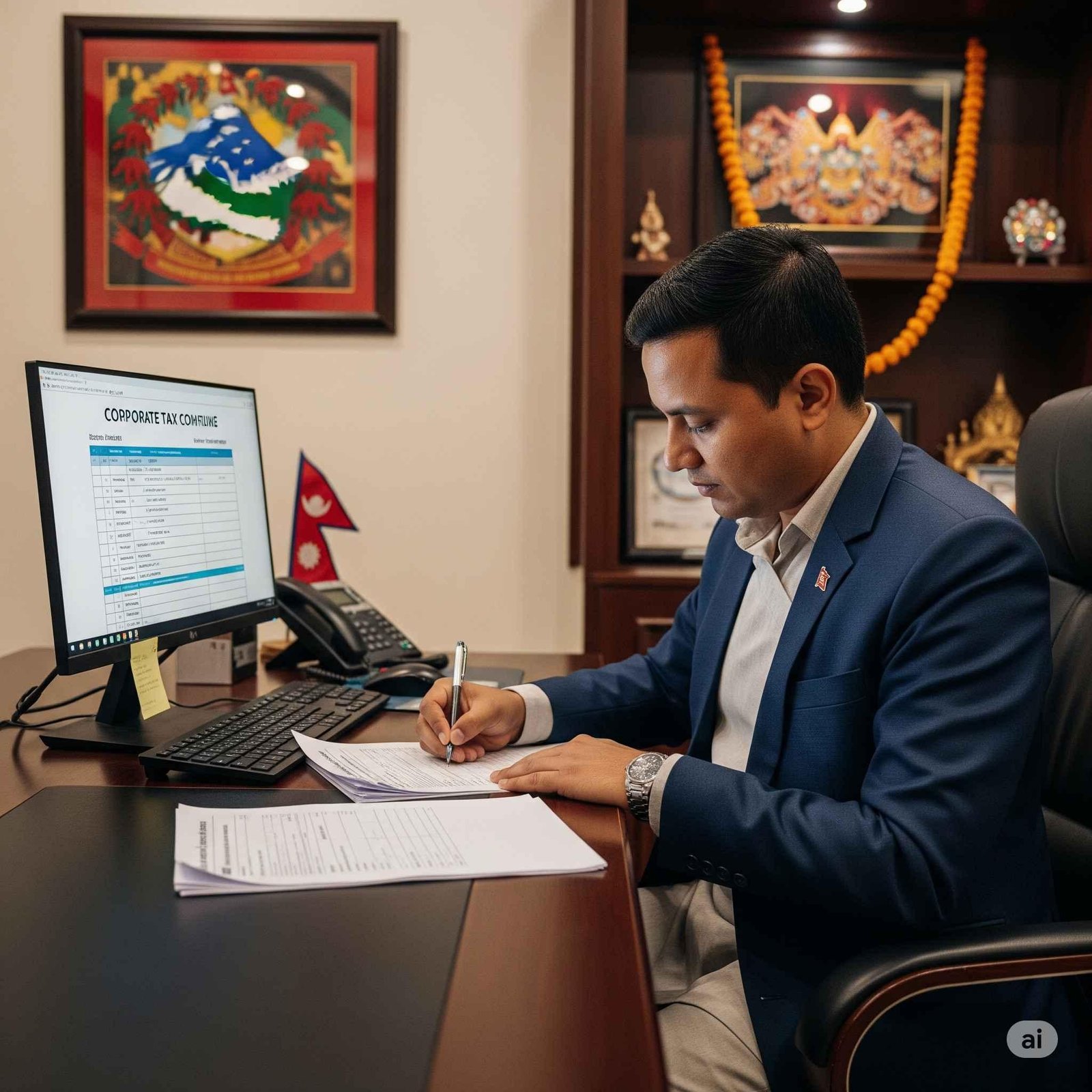
 by Tax Qunatity
Corporate tax in Nepal has undergone significant reforms in 2025, creating new opportunities and challenges for businesses. This comprehensive guide provides detailed insights into Nepal's corporate taxation system, ensuring complete compliance while maximizing tax efficiency for your business operations.
The corporate tax landscape in Nepal continues evolving, with updated regulations affecting over 15,000 registered companies. Understanding these changes is crucial for business owners, accountants, and financial advisors seeking optimal tax strategies.
Corporate tax in Nepal operates under the Income Tax Act 2058, administered by the Inland Revenue Department. Key regulatory components include:
| Legislation | Purpose | Effective Date |
|---|---|---|
| Income Tax Act 2058 | Primary tax law | 2002 |
| Income Tax Rules 2059 | Implementation guidelines | 2002 |
| Finance Act 2081 | Annual amendments | 2024 |
| Tax Administration Act | Procedural framework | 2016 |
Corporate tax administration involves multiple authorities:
Corporate tax rates in Nepal vary based on business type and annual income:
| Business Category | Tax Rate | Threshold |
|---|---|---|
| Banks and financial institutions | 30% | All income |
| Insurance companies | 30% | All income |
| Manufacturing companies | 25% | All income |
| Other companies | 25% | All income |
| Cooperatives | 20% | All income |
Reduced corporate tax rates apply to specific sectors:
| Sector | Tax Rate | Conditions |
|---|---|---|
| Export-oriented industries | 20% | Minimum 75% export |
| IT companies | 15% | First 3 years |
| Hydropower projects | 20% | Up to 10 years |
| Tourism industry | 15% | First 5 years |
Minimum corporate tax ensures revenue collection regardless of declared profits:
Corporate taxable income comprises various revenue streams:
Corporate tax deductions reduce taxable income significantly:
| Deduction Category | Limit | Conditions |
|---|---|---|
| General business expenses | 100% | Wholly and exclusively for business |
| Depreciation | As per schedule | On business assets |
| Research and development | 200% | Approved R&D activities |
| Training expenses | 200% | Employee skill development |
| Export promotion | 200% | Marketing in foreign countries |
Expenses not allowed for corporate tax purposes:
Corporate tax returns must be filed annually by companies:
Filing Deadlines:
Essential documents for corporate tax filing:
| Document Type | Purpose | Retention Period |
|---|---|---|
| Audited financial statements | Income verification | 6 years |
| VAT returns | Cross-verification | 6 years |
| Payroll records | Employee tax deduction | 6 years |
| Invoice registers | Business expense proof | 6 years |
| Bank statements | Financial transaction records | 6 years |
Advance corporate tax payments are mandatory:
Corporate tax incentives promote specific sectors:
| Incentive Type | Benefit | Sector |
|---|---|---|
| Tax holidays | 5-10 years exemption | Priority sectors |
| Accelerated depreciation | 100% first year | Manufacturing |
| Loss carry forward | 7 years | All sectors |
| Investment allowance | 25% additional deduction | Capital investments |
Export-oriented companies receive substantial benefits:
Companies in SEZ enjoy comprehensive tax packages:
Companies must withhold tax on various payments:
| Payment Type | Withholding Rate | Threshold |
|---|---|---|
| Contractor payments | 1.5% | Above NPR 5,000 |
| Professional fees | 15% | Above NPR 1,000 |
| Dividend payments | 5% | All amounts |
| Interest payments | 15% | Above NPR 2,000 |
| Rent payments | 10% | Above NPR 30,000 |
Withholding tax compliance involves:
Nepal's tax treaties prevent double taxation:
| Country | Corporate Tax Rate | Withholding Tax Rates |
|---|---|---|
| India | Reduced rates | 5-15% |
| China | Reduced rates | 5-10% |
| South Korea | Reduced rates | 5-10% |
| Thailand | Reduced rates | 10-15% |
Foreign tax credit mechanism:
Transfer pricing in Nepal follows international standards:
Documentation Requirements:
APA program provides certainty:
Corporate tax audits follow structured processes:
| Audit Type | Scope | Timeline |
|---|---|---|
| Desk audit | Limited verification | 30 days |
| Field audit | Comprehensive review | 90 days |
| Special audit | Specific issues | 180 days |
| Survey operations | Information gathering | 15 days |
Tax assessment involves multiple stages:
Corporate tax penalties for non-compliance:
| Violation | Penalty | Maximum Amount |
|---|---|---|
| Late filing | 0.1% per day | 100% of tax |
| Late payment | 15% annually | No limit |
| Underreporting | 50% of tax | No limit |
| Non-maintenance of records | NPR 10,000 | Per violation |
Effective compliance strategies:
Key changes affecting corporate tax:
Expected changes in corporate taxation:
Corporate tax rate in Nepal is 25% for most companies, with banks and financial institutions paying 30%. Special rates apply to cooperatives (20%) and certain priority sectors.
Corporate tax returns must be filed by Chaitra 15 (March 30) for companies following the Nepali calendar, and Poush 15 (December 30) for those following the Gregorian calendar.
Minimum corporate tax is 0.25% of annual turnover for companies with turnover exceeding NPR 20 million, ensuring minimum revenue collection regardless of declared profits.
Export-oriented companies enjoy reduced corporate tax rates of 20% instead of 25%, provided they export at least 75% of their production.
Advance tax is paid in three installments: 40% by Kartik 15, 30% by Falgun 15, and 30% by Asadh 15, based on the estimated annual tax liability.
Non-deductible expenses include personal expenses of directors, government penalties, capital expenditure, excessive entertainment expenses, and donations to non-approved organizations.
Tax losses can be carried forward for 7 years to offset future profits, providing flexibility for companies experiencing temporary financial difficulties.
Withholding tax rates vary by payment type: 1.5% for contractor payments, 15% for professional fees, 5% for dividends, and 10% for rent payments above specified thresholds.
Double taxation relief is available through tax treaties with various countries and foreign tax credit mechanisms, preventing the same income from being taxed twice.
Late filing penalties are 0.1% per day of the tax amount, with a maximum penalty of 100% of the tax due, making timely filing crucial for cost management.
Effective tax planning involves:
Tax advisory benefits:
Corporate tax in Nepal presents both opportunities and challenges for businesses operating in the country. The reformed tax system offers various incentives while maintaining reasonable compliance requirements for different business categories.
Success in corporate tax management requires thorough understanding of applicable rates, proper documentation, timely filing, and strategic planning. Professional consultation ensures optimal tax efficiency while maintaining full compliance with Nepal's evolving tax regulations.
The corporate tax environment in Nepal continues modernizing, with digital initiatives and international standard adoption creating a more transparent and efficient system. Businesses that proactively adapt to these changes position themselves for sustainable growth in Nepal's dynamic economic landscape.
This guide provides general information and should not replace professional tax advice. Consult qualified tax professionals for specific tax planning and compliance requirements.